Clinical Practice
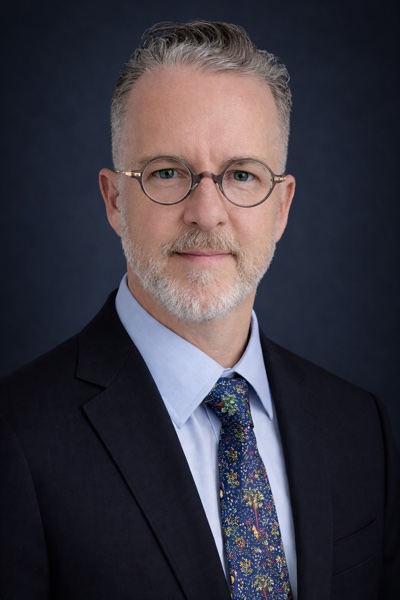
I am a board-certified neurosurgeon practicing with Arrowhead Neurosurgical Medical Group across Southern California's Inland Empire and Coachella Valley. My hospital affiliations include Eisenhower Health, Arrowhead Regional Medical Center, Riverside University Health System, and Desert Regional Medical Center.
I completed my neurosurgical residency at Arrowhead Regional Medical Center and my internship at Desert Regional Medical Center. I graduated from Liberty University College of Osteopathic Medicine and hold board certification from the American Osteopathic Board of Surgery in Neurosurgery.
My clinical work spans the full spectrum of neurosurgery: trauma, spine, cerebrovascular disease, and neuro-oncology.
Research Interests
My research sits at the boundary between clinical neurosurgery and the science of consciousness.
In the operating room, I witness what happens when the architecture of the brain is disrupted — by hemorrhage, by tumor, by trauma. Patients lose memory, language, emotion, identity. Sometimes they lose consciousness entirely. And sometimes, against all expectations, they recover things we thought were gone.
These observations drive my research:
I have developed a soliton-based framework for understanding consciousness loss in aneurysmal subarachnoid hemorrhage — describing the collapse of coherent neural activity as a wave phenomenon rather than a simple structural failure, and connecting it to the systemic pathology that follows. This work is now published in Cureus.
I have also developed two clinical screening instruments — Pre-CERS (Pre-Craniotomy Emotional Readiness Screen) and PCRES (Post-Craniotomy Recovery Experience Scale) — designed to measure the emotional dimensions of brain surgery that existing tools like the PHQ-9 and GAD-7 miss entirely. Both instruments are currently undergoing formal psychometric validation following the COSMIN methodology.
My published and ongoing research also includes traumatic brain injury outcomes, cerebral aneurysm management, and the neurological effects of music and binaural beats — exploring how external frequency environments interact with endogenous brain rhythms.
I believe neurosurgeons occupy a unique vantage point in consciousness science. We are the only physicians who routinely intervene on the physical substrate of subjective experience. The field has been slow to leverage that position. I intend to change that.
Selected Research
The Composite Homeostatic Wave: A Soliton-Based Framework for Understanding Consciousness Loss and Systemic Pathology in Aneurysmal Subarachnoid Hemorrhage
PublishedA conceptual framework describing the collapse of coherent neural oscillatory patterns during acute subarachnoid hemorrhage, proposing that consciousness loss follows soliton wave dynamics rather than simple structural disruption, and connecting these dynamics to the systemic pathology that accompanies the event. Read on Cureus →
Pre-CERS & PCRES: Clinical Instruments for Emotional Recovery
Undergoing COSMIN validationTwo screening instruments measuring pre-surgical emotional readiness and post-craniotomy recovery across eight empirically derived domains. Designed to fill the gap left by standard psychiatric screening tools in neurosurgical populations.
Neurological Effects of Music and Binaural Beats
Published / ongoingInvestigating how structured auditory frequency environments modulate endogenous brain rhythms, with implications for non-pharmacological approaches to anxiety, pain perception, and recovery.
Projects
Everything I build is an extension of the same question: how do we read, map, and support the human being — not just as a body on a table, but as a conscious system operating across biological, cognitive, and experiential layers?
Consciousness & Research
The Decoded Human
An AI-powered literature connectome that discovers hidden semantic connections across open-access scientific papers. We ingest research from PMC, bioRxiv, and medRxiv, extract core scientific content, and build a living knowledge graph where papers are connected not just by citations, but by what they actually say.
Because the next breakthrough in consciousness science won't come from a single paper — it will come from seeing connections across thousands of them that no individual researcher could find alone.
Pre-CERS & PCRES
Two clinical screening instruments for the emotional arc of brain surgery. Pre-CERS screens emotional readiness before craniotomy. PCRES measures recovery across eight domains — identity, cognition, emotions, grief, fatigue, social connection, the medical-experience gap, and hope. Free, open, and undergoing formal psychometric validation.
Because surviving surgery is not the same as feeling like yourself again.
Patient Support
Still You Recovery
Free resources for the emotional, cognitive, and identity changes that nobody tells you about after brain surgery or stroke. Guides for patients, caregivers, and clinicians. No registration. No paywalls.
This project exists because I watched too many patients survive surgery and then lose themselves in the aftermath — and realized that no one was telling them what was coming, or that it was normal.
Still You Foundation
A foundation dedicated to emotional recovery after brain injury, stroke, and brain surgery. The current system fails these patients: 5–10 month waitlists for neuropsychological evaluation, no standardized emotional screening, and a discharge process that sends people home with surgical instructions but nothing for the identity crisis that follows.
We exist to close that gap — through free resources, validated screening tools, clinician education, and AI-assisted emotional recovery support.
Health Technology
CredentialDOMD
Physician credential management that runs itself. Track every license, certification, privilege, and CME requirement across all 50 states — with intelligent reminders, AI document scanning, and a compliance dashboard that tells you exactly what's expiring and when.
Built because I lived the credentialing nightmare firsthand and decided no physician should have to manage it with spreadsheets and sticky notes.
ANMG CallSync
Multi-site neuroscience on-call scheduling for Arrowhead Neurosurgical Medical Group's provider network across ARMC, RUHS, RCH, and EMC. Designed to coordinate coverage across hospitals that currently rely on disconnected systems.
Technology & AI
My technical work applies principles from neuroscience — memory consolidation, pattern recognition, hierarchical processing — to the design of AI systems that think more like the brain does. This informs how I build tools like The Decoded Human and the AI-assisted recovery support behind Still You.
I believe physicians should be building the tools that shape the future of medicine, not waiting for Silicon Valley to build them for us.
The Deeper Question
I am not only a surgeon. I am someone who has spent years studying how human identity is constructed — neurologically, developmentally, and experientially — and what happens when those layers are disrupted or transformed.
This inquiry has led to The Encoded Human Project — an open research initiative exploring how biological, psychological, and consciousness-level patterns interact in the human system. The project sits at the intersection of neuroscience, developmental psychology, and the frameworks humans have used across cultures to understand what they are.
Science, not belief. Observation, not dogma.
Writing
I write about what the operating room teaches you about the mind, what the mind teaches you about everything else, and the questions that keep a neurosurgeon up at night — not because of the surgery, but because of what the surgery reveals.
Find Me
Contact
For clinical appointments, please contact Arrowhead Neurosurgical Medical Group at (760) 610-8781.
For research collaborations, speaking invitations, or professional inquiries, please reach out via LinkedIn.